PREP WORK ~ BEFORE YOU HIT THE TABLE
Find the balance
It is always a good idea to get a little familiar with your client’s goals or desired direction. Find the balance between going in educated and working for free. Invest in your own success by increasing your confidence a bit!

What kind of research should I do?
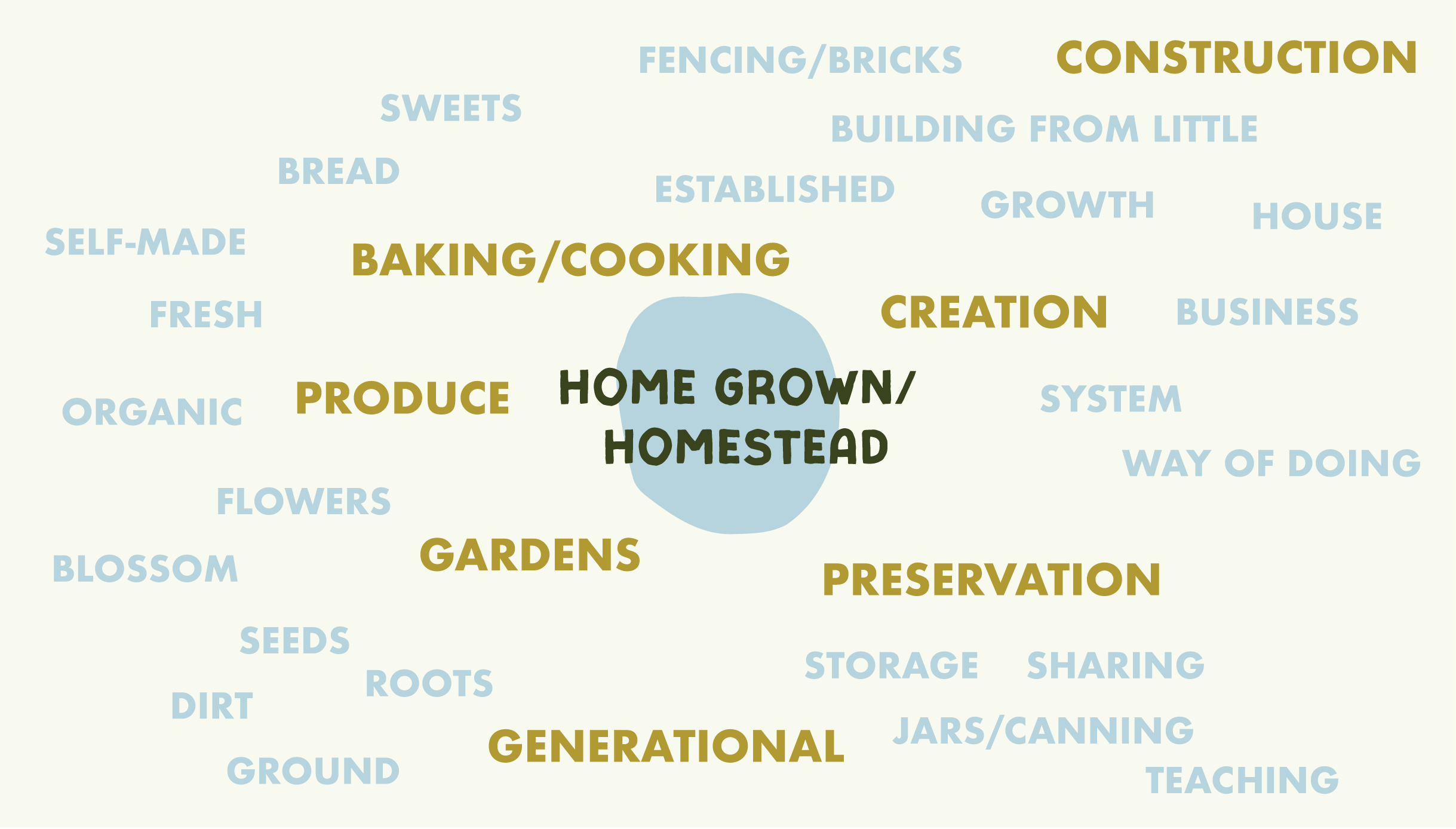
One of my favorite ways to spark the creative process is to mind map. Start by listing words that hold meaning for the client, then write down related terms that connect to them. You will end up with a network of concepts that may influence their brand identity or logo deliverables. This approach works for many types of design. For UX and UI, think about the experience itself and what connections will make the process more cohesive. For spatial design, consider the cultural relationships people bring with them. Apply this mindset of discovery and curiosity to any creative profession. You can even turn your research into a client facing element that helps explain strategy and rationale behind your decisions.
For this collective, I created the word association web shown below. It informed the name of the group as well as the visual direction. The ideas of creating from scratch, methodically making, and working as a collective all relate to the hands on hobbies many creatives enjoy. Themes of homestead and crunchy lifestyle aesthetics show up in both the visuals and tone of this collective. These themes help viewers draw parallels between creative systems and everyday rituals.
Why does research matter?
Lirra Hill with Adobe explains that strong research comes from understanding people, not from relying on assumptions. I would also add that knowing the assumptions people may make at first glance can be useful. Consider what someone might infer from an initial impression, then think about how you can guide that impression to better reflect what the client truly wants to communicate.
Preparing for research
Define your objectives.
Establish your audience.
Choose your method.
Potential research types include:
quantitative product analytics
your own primary research based on the topic
secondary sources: articles, visuals, other creatives
consumer behavior and social trends
How can I create questions that lead to constructive research?
Ask open ended questions and avoid leading statements. You want the client to speak freely about their vision. Be an active listener. As the process continues, work in some of the information they have already shared, so the conversation feels more personal.
Ask questions that connect to the client’s objectives.
Begin with warm up questions, then narrow in.
Search for associations, feelings, patterns, and themes.
The 4 Cs,, Consumer, Category, Culture, and Client, help organize your research into sections that make forming connections easier.
Using the research
Take what you learn in your research and combine it with the insights from your introductory conversations with clients. This is where true insight appears,, meaning how the information relates to the visual communication you will build. Present this insight to your clients in a clear and conversational way. Do not show raw numbers. Instead explain why your findings matter and how they guide the solution to their problem.
Hill, Lirra. “Research Basics Every Designer Should Know.” Adobe Design, adobe.design/stories/leading-design/research-basics-every-designer-should-know.